
Manufacturing

How Agentic, Physical and Sovereign AI are transforming manufacturing
As AI moves deeper into manufacturing, organizations need a digital thread connecting intelligence to physical action, supported by cost-efficient edge infrastructure and greater control over data

Building the services economy for industrial manufacturers
Industrial manufacturers are shifting from one-time equipment sales to outcome-based services, using AI, connected assets and lifecycle data to reshape customer experience, operations and aftermarket

AI-enabled quality and process optimization in manufacturing
AI is helping manufacturers move beyond operational visibility toward predictive and prescriptive insights that can improve quality, optimize resources and support better decisions on the shop floor

Governance as the operating foundation for industrial AI
As agents, digital twins and Physical AI take on greater operational responsibility, manufacturers need governance that aligns autonomy with risk, accountability and trust
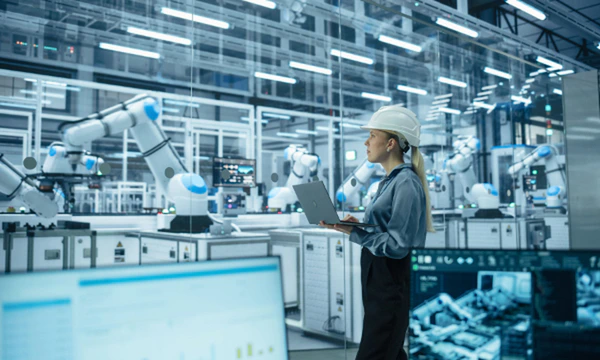
AI-led engineering: Turning product complexity into manufacturing advantage
As manufacturers move AI from pilots into product development and production, competitive advantage will depend on connecting industrial data, digital twins, knowledge graphs and governed Physical AI

Engineering AI beyond the hype: Why context is the real competitive advantage
As engineering and manufacturing organizations move beyond AI experimentation, connected data, digital threads and contextual intelligence will be critical to delivering measurable business value

AI to ROI: Turning engineering and manufacturing intelligence into business outcomes
As engineering and manufacturing organizations scale AI, the real challenge is no longer adoption alone but connecting intelligence, governance and lifecycle data for measurable business outcomes

Autonomous, learning systems are ushering in the dawn of a self-improving factory floor and redefining manufacturing economics

Roadmap to autonomous manufacturing: An AI driven approach based on engineering foundations
Autonomous manufacturing can be achieved through a structured journey built on foundational engineering, converged data and human-led AI
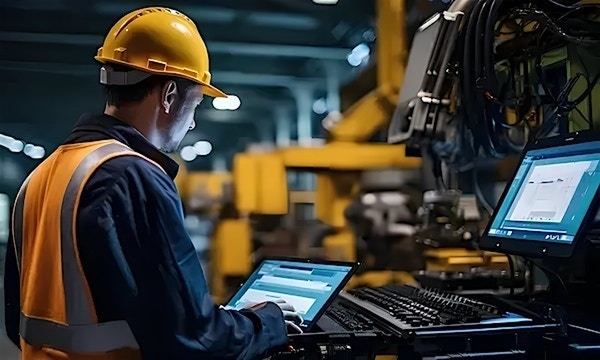
In the new industrial era, a secure, AI-powered digital thread is essential to unify data, empower workers, enhance efficiency and drive measurable outcomes in manufacturing
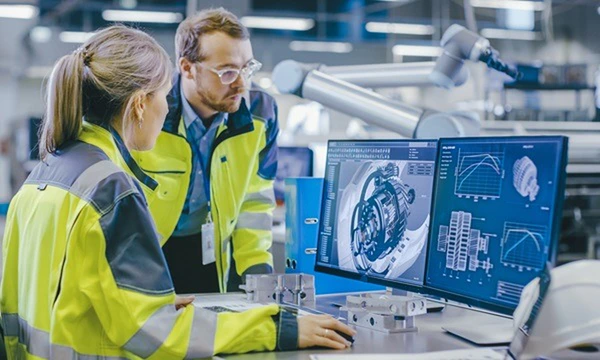
The AI edge: Driving scalable innovation in manufacturing
Powered by AI and its subsets, including GenAI and Agentic AI, cloud and IIoT technologies, smart manufacturing is evolving fast

Avoiding strategic blind spots in manufacturing digital transformations
Slow technology adoption puts manufacturers at risk. Successful digital initiatives need adaptable frameworks, upskilling and proactive cybersecurity to succeed
