
Featured

Why Verizon Business is betting on AI and cloud as the future of telecom
Chau Dang, VP of Operations, Governance and Strategy at Verizon Business, discusses how AI and cloud infrastructure are pivotal in transforming telecom and meeting evolving customer expectations
Top stories
All content

At MWC 2026, leaders from Circles Aspire and HCLTech discussed why traditional digital transformation has fallen short and why AI must sit at the core of telecom architecture to drive real disruption
Read the article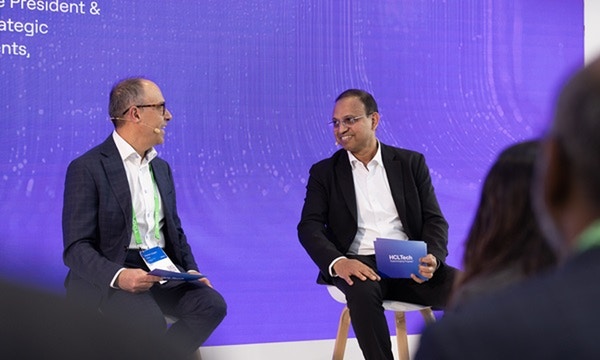
At MWC 2026, a discussion at HCLTech’s booth examined whether today’s networks are prepared for AI-scale workloads and what must change for the intelligent network economy to take shape
Read the article
At MWC 2026, leaders from AT&T, Liberty Latin America and HCLTech discussed how to move from “still automating” to truly autonomous telecom operations while maintaining governance, security and trust
Read the article
Open gateway, open possibilities
Watch now
One chip, endless possibilities
Watch now
The transition from SIM to eSIM is reshaping global connectivity by enabling remote provisioning, reducing hardware constraints and unlocking new business models
Read the article
The rise of MVNOs is transforming telecom
Watch the video
Mobile Virtual Network Operators are set to reshape telecom markets worldwide, with Brazil emerging as a key player in this space
Read the article
Strengthening the digital spine: How telcos can thrive through network transformation
Watch the video
On Day 3 of MWC at HCLTech's booth, industry leaders across a range of sessions explored several topics that are reshaping the telco industry
Read the article
On Day 2 of MWC at HCLTech's booth, industry leaders across a range of sessions explored several topics that are reshaping the telco industry
Read the article
On Day 1 of MWC at HCLTech's booth, industry leaders across a range of sessions explored several topics that are reshaping the telco industry
Read the articleTrending questions
5G ist ein Mobilfunkstandard, der den drahtlosen Internetzugang und die Konnektivität mit wesentlich höheren Geschwindigkeiten ermöglicht. 5G wird eine entscheidende Rolle in der gesamten Wertschöpfungskette des industriellen Wandels spielen.
5G und andere drahtlose Kommunikationssysteme nutzen Funkfrequenzen, um Daten von einem Gerät zum anderen zu übertragen. Um eine bessere Konnektivität zu erreichen, arbeitet 5G mit hohen Funkfrequenzen, wodurch mehr Daten mit einer höheren Geschwindigkeit übertragen werden können. Um sicherzustellen, dass diese Signale nicht blockiert werden, installieren die Anbieter mehr 5G-Sender und -Antennen, um das drahtlose Netzwerk bei seiner Einführung zu unterstützen.
4G und 5G sind Technologiestandards für zellulare Breitbandnetze. 5G hat 4G ersetzt. Der Technologiestandard der fünften Generation ist 10-mal schneller als 4G und ermöglicht schnellere Downloadgeschwindigkeiten und eine schnellere Verbindung zum Internet.
5G ist wichtig, denn es wird schnellere Geschwindigkeiten liefern und mehr Geräte aufnehmen können als 4G-Netze. Es wird das Bindegewebe bilden, das Innovationen in verschiedenen Branchen unterstützt und Unternehmen in die Lage versetzt, ihre Produktivität zu steigern und neue Möglichkeiten zu schaffen, indem sie riesige Datenmengen sofort über dezentrale Netze übertragen können. Die Frage ist nicht mehr, warum Unternehmen 5G nutzen sollten, sondern wie sie die Einführung beschleunigen und Einnahmen aus diesen neuen Lösungen und Diensten erzielen können.
Subscribe to the HCLTech Newsletter
for our latest news and insights