Requirements are scattered across a chaotic mix of email threads, scanned PDFs, meeting notes and voice recordings. Subsequently, someone must manually sift through this disorganized information to locate crucial details such as SKUs, quantities, budgets, dates, addresses, PO references and compliance requirements. This inefficient start sets the stage for potential issues throughout the entire process.
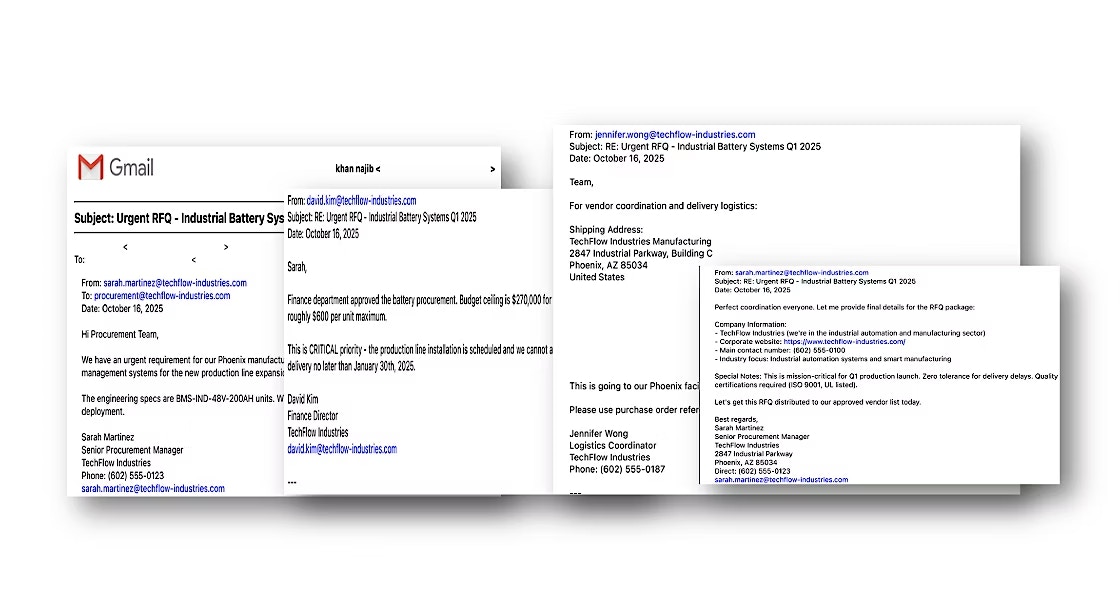
Figure 1: Complex Cross-Team Email Chain with Buried Key Details
RFQs are distributed manually, with suppliers responding in various formats (emails, PDFs, scans, CSVs). This data is then manually re-entered into systems, introducing errors and delays.
Meanwhile, finance and logistics teams make decisions with partial information. Supplier selection and route planning are delayed, while critical factors like weather, port congestion and news updates are often considered too late.
The result: fragmented communication leads to delayed RFQs, higher costs, increased CO2 emissions and weak audit trails.
Key inefficiencies in traditional procurement workflows
Most teams struggle not due to a lack of tools, but because workflows are fragmented across multiple platforms and formats.
Common issues we observe include:
- Scattered, unstructured requirements across departments and communication channels
- Repeated manual data entry, leading to errors and delays
- Inconsistent supplier responses, complicating quote comparisons
- Slow decision-making on suppliers and routes due to contextual information buried in email threads and attachments
- Late arrival of risk signals, including weather and news affecting routing and delivery
- Weak audit trails resulting from dispersed decision rationales
This is fundamentally a workflow problem, not a personnel issue
Introducing SupplyChain Copilot: Streamlining RFQ-to-fulfillment process
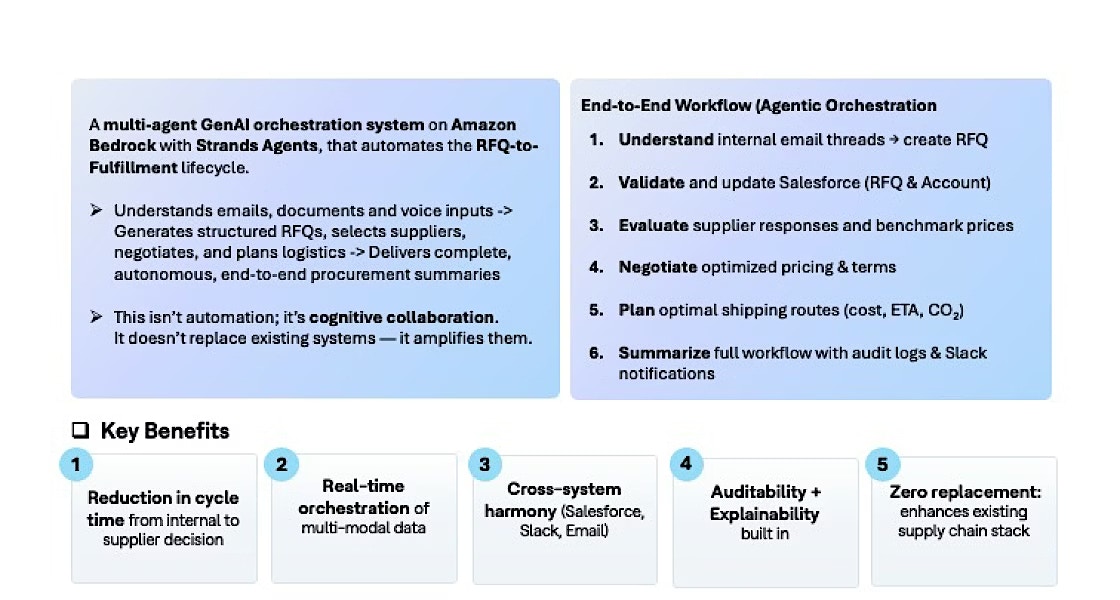
Figure 2: SupplyChain Copilot at a glance
SupplyChain Copilot is a multi-agent GenAI system built on Amazon Bedrock with Strands Agents, designed to manage the entire RFQ-to-fulfillment lifecycle. It seamlessly integrates with existing workflows, processing inputs from email threads, documents and voice recordings to produce actionable outputs:
- Structured RFQs with accurately filled fields
- Supplier rankings based on clear criteria
- Streamlined quote extraction for swift comparisons
- Consistent negotiation drafts maintaining terms and tone
- Logistics planning with cost, ETA and CO2 trade-off analysis
- Comprehensive summaries including audit logs and Slack updates
SupplyChain Copilot is not intended to replace your current systems. Instead, it works alongside Salesforce, email and Slack to enhance and expedite your existing processes.
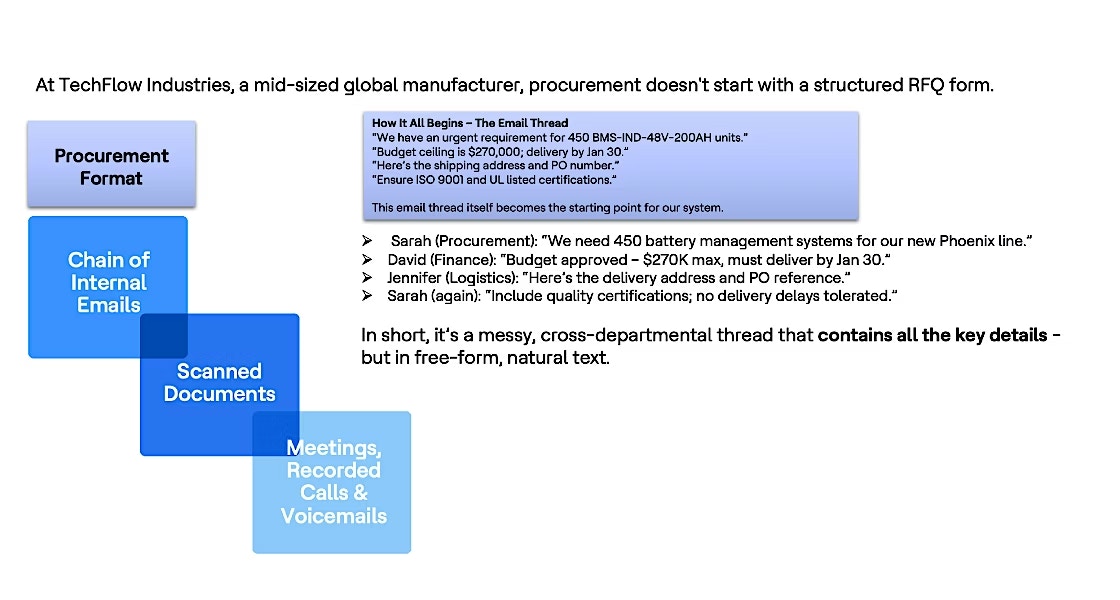
Figure 3: Real-world RFQ initiation at TechFlow Industries
At TechFlow Industries, a mid-sized global manufacturer, the procurement process rarely begins with a structured RFQ form. Instead, it typically starts with a fragmented email thread:
- Urgent requirement: 450 BMS-IND-48V-200AH units
- Budget ceiling: $270,000. Delivery deadline: Jan 30
- Shipping address and PO number attached
- Required certifications: ISO 9001 and UL listed
Critical information is contributed piecemeal by procurement, finance and logistics teams across various messages. Additional details arrive via scanned documents, meeting notes and recorded calls. While each contributor assumes the important information is self-evident, it rarely is.
This disjointed communication thread becomes the system input.
SupplyChain Copilot is designed to process this as a valid starting point, rather than treating it as noise that requires manual preprocessing.
SupplyChain Copilot's end-to-end process flow
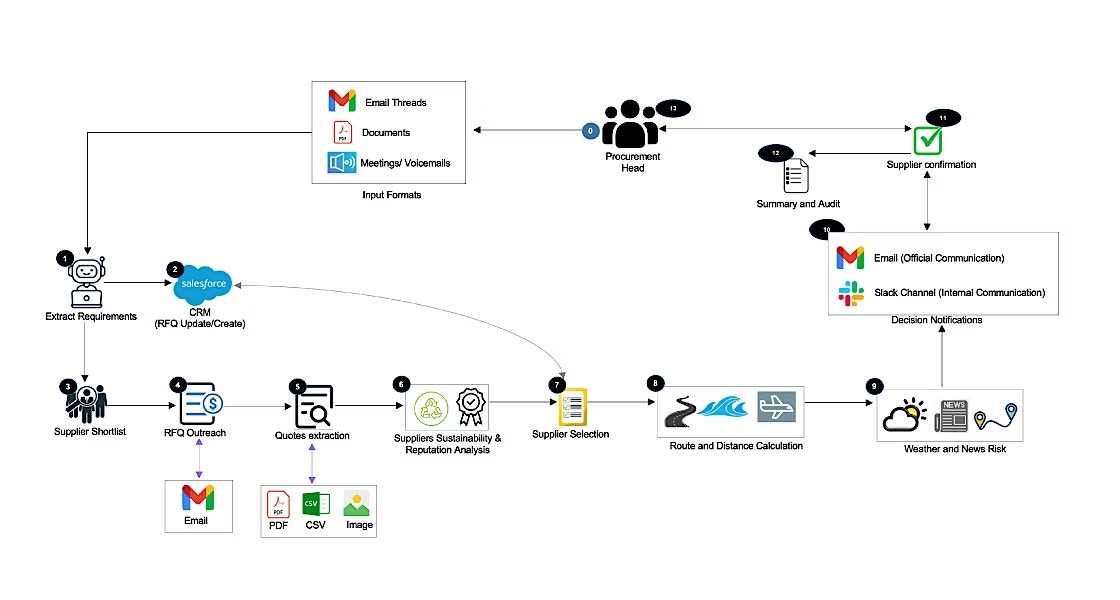
Figure 4: Comprehensive Procurement Lifecycle - From Intake to Delivery Planning
- Extract requirements
- Reads email threads, documents and meeting or voicemail inputs
- Pulls out the fields teams usually hunt for. SKUs, quantities, budgets, deadlines, addresses, PO references, compliance requirements
- CRM. RFQ update or create (Salesforce)
- Creates or updates the RFQ in Salesforce so the record is not trapped in email
- Stores RFQ state plus audit data for traceability
- Supplier shortlist
- Builds the shortlist based on RFQ needs and available supplier data
- Prepares the supplier set for outreach
- RFQ outreach
- Sends RFQ requests to shortlisted suppliers through email
- Tracks outreach status so follow-ups are not manual
- Quote extraction
- Ingests supplier responses across formats. Email, PDF, CSV, image
- Extracts quote fields using OCR where needed
- Supplier sustainability and reputation analysis
- Pulls public context signals (Tavily, Wikipedia) to reduce blind spots during selection
- Keeps this separate from internal supplier records
- Supplier selection
- Compares quotes and supplier criteria side by side
- Selects the preferred supplier based on the defined evaluation logic
- Route and distance calculation
- Calculates route options for road, sea and air
- Produces route distance and base transit estimates for comparison
- Weather and news risk
- Checks weather and news signals that can affect the selected routes
- Flags obvious disruption risks early, not after the decision is already in motion
- Decision notifications
- Sends official communication via email
- Sends internal updates via Slack
- Supplier confirmation
- Captures supplier confirmation and updates the workflow status
- Keeps the confirmation tied to the RFQ record
- Summary and audit
- Produces a final run summary plus an audit record
- Keeps key decisions and artifacts linked to the RFQ and supplier thread
- Procurement Head review and control
- Procurement Head stays in the loop at the right points
- Reviews key outputs and approves before final actions
This automated workflow streamlines the entire procurement process, from initial requirement gathering to final decision-making and delivery planning.
Conclusion
The SupplyChain Copilot represents a significant leap forward in addressing the chronic inefficiencies plaguing traditional procurement processes. By seamlessly integrating with existing systems and workflows, it transforms the fragmented, error-prone RFQ-to-fulfillment lifecycle into a streamlined, intelligent process.
This Gen AI powered solution doesn't aim to replace existing systems but rather to augment and optimize them. By tackling the fundamental workflow issues that have long hindered procurement efficiency, SupplyChain Copilot enables businesses to make faster, more informed decisions, reduce costs and improve overall supply chain performance.
As companies continue to navigate complex global supply chains, tools like SupplyChain Copilot will be instrumental in maintaining competitiveness, ensuring compliance and driving operational excellence in procurement processes.
This concludes Part 1 of our blog series. In Part 2, we will get into the Technical Architecture and Agentic Workflow that power the SupplyChain Copilot solution.