


 記事を聴く
記事を聴く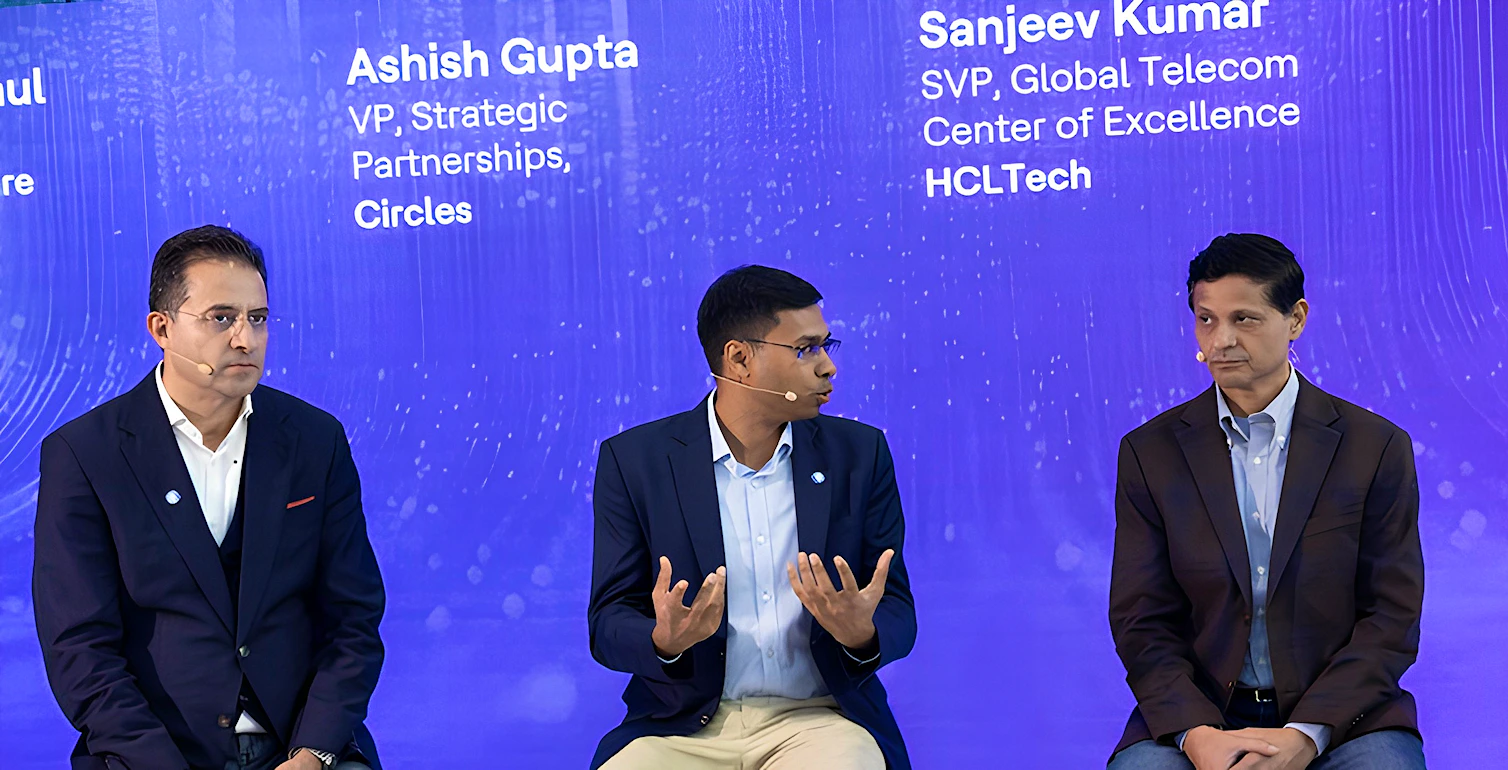
For more than a decade, telcos have spoken about digital transformation. Yet outcomes have often fallen short.
Sanjay Kaul, CEO of Circles Aspire and COO/CRO of Circles Group, said that telcos have been “running digital transformation for years” with “very abysmal outcomes.”
The reason? AI has too often been bolted onto legacy stacks rather than embedded into the enterprise architecture itself.
“You take on AI and you bolt it on top of the legacy. And then you expect AI to do the magic,” he said. “If you need AI to show its magic, you have to weave it natively into your core enterprise architecture.”
That architectural choice, native versus layered, is the real inflection point.
From operator to platform disruptor
Circles Group’s origin story is central to its positioning. Founded 12 years ago to launch Singapore’s first digital mobile operator, the company built its own end-to-end stack, from OSS to customer app, as a unified SaaS platform.
Rather than assembling traditional vendor components, it engineered a cloud-native, AI-embedded architecture inspired more by digital platforms like Uber and Alibaba than by legacy BSS models.
Kaul highlighted a recent transformation of a 30-million-subscriber operator in Indonesia, where seven vendors were replaced with a single unified stack. His point was not simply consolidation but architectural coherence.
The core bet: if AI is natively embedded across every layer, transformation execution becomes radically simpler.
The real shift: Moving AI from back office to front office
Ashish Gupta, VP of Strategic Partnerships at Circles Aspire, reframed the discussion around measurement.
AI in telco is not new. The term “digital transformation” is not new. The question is how to measure progress meaningfully.
He emphasized two principles:
- Anchor transformation in business outcomes
- Distinguish between leading and lagging indicators
“The first important point is [to] anchor the outcomes on the business metric,” he said.
Leading indicators include customer engagement metrics: app adoption, time spent, new model uptake.
Lagging indicators reveal true business impact: improved NPS, churn reduction and ARPU growth.
He also cautioned against expecting instant returns. “You will not get the outcomes on day one or day 10. You have to get it over a period of time.”
But Kaul pushed the conversation further: most operators today deploy AI in the back-end to reduce cost and improving operations. The real opportunity, he argued, lies in front-end AI.
True “nirvana” arrives when AI dynamically creates offers, adjusts pricing and personalizes experiences in real time, not based on quarterly reports and hindsight analytics, but continuously.
The ambition is to move beyond traditional customer segments and toward true individualization, where AI treats every subscriber as a segment of one. That means delivering hyper-personalized offers, pricing and experiences in real-time, based on individual behavior, context and preferences rather than broad demographic categories.
That shift requires more than models. It requires architecture and clean, unified data foundations.
Data frameworks: Garbage in, garbage out
Both leaders stressed that AI effectiveness depends on data integrity.
Embedding AI natively forces a redesign of the data framework beneath it. Without that, personalization and automation remain superficial.
Gupta added another dimension: ecosystem aggregation. “Today, telcos by themselves alone, can’t do everything. You have to bring the ecosystem together,” he said.
By embedding services like fintech within telecom apps, operators can combine mobility data, demographic data and financial data to create new monetization streams.
The convergence of telco and financial services, for example, can strengthen loyalty and increase ARPU, provided governance and data usage are executed responsibly.
Productivity as a future-state KPI
Gupta also outlined a longer-term operating model in which autonomy fundamentally reshapes how telcos are run. As he described it, “the way that we have built the stack is completely autonomous operations with AI [having] a lot of agentic feature[s].”
In that model, significantly leaner teams could oversee an entire digital telco because much of the provisioning, care and operational orchestration is handled natively by the platform itself.
The metric, however, is not headcount reduction. It is productivity per employee and the maturity of automation across the enterprise.
This vision aligns with a broader industry shift toward AI-driven, agentic operations, where stack-native intelligence manages workflows, customer journeys and personalization in near real time, freeing human teams to focus on growth, innovation and ecosystem expansion.
Urgency and outcome-based partnerships
Srini Lakkaraju, SVP and Business Head – CSP at HCLTech, connected the platform discussion to broader market urgency.
He observed that leadership profiles inside major telcos are shifting, with Silicon Valley-style executives introducing new speed expectations.
“They are bringing a level of urgency like never seen before in the North American market,” he said.
Importantly, “outcome” is being redefined. Operators increasingly expect partners to commit not just to technical SLAs but to measurable business KPIs, such as churn reduction, hyper-personalization and customer experience gains.
HCLTech’s differentiated positioning, he argued, lies in combining advisory, execution and proprietary platform assets, enabling greater control over delivery outcomes rather than relying solely on third-party stacks.
The partnership with Circles Aspire expands that capability: pairing cloud-native AI platforms with large-scale system integration and consulting strength.
Reverse RFQ: a signal of disruption
Kaul closed with a concrete example of a different commercial approach: a “reverse RFQ” concept that invites operators to submit their legacy IT stacks, with Circles proposing to replace them and commit to measurable total cost of ownership reductions under long-term agreements.
The underlying argument was straightforward: incremental modernization may not be enough. In many cases, deeper architectural redesign is required to unlock meaningful gains from AI-native platforms.
AI-native is not optional
The panel highlighted that digital transformation as a bolt-on has reached its limits.
To unlock hyper-personalization, autonomous operations and new revenue models, AI must be architected into the core stack, not layered onto legacy systems.
For telcos willing to rethink architecture, commercial models and ecosystem roles, the rewards could be transformative.
For those that hesitate, the window is narrowing.


