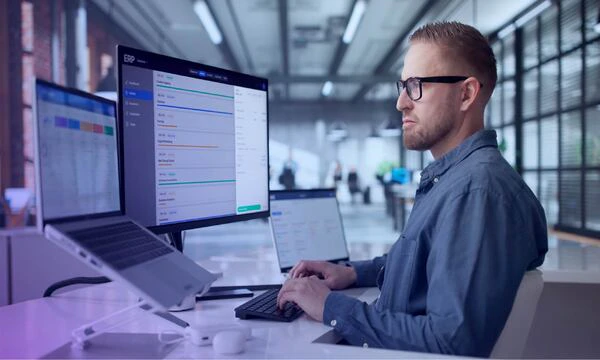
As enterprises embrace hybrid work, employees connect to business applications and data from an ever-expanding range of devices. Laptops, smartphones, tablets, desktops and wearables have become essential endpoints in the modern workplace. Managing and securing this diverse ecosystem is a challenge for IT teams and it’s only getting bigger.
Unified endpoint management (UEM) offers a centralized approach that enables organizations to manage, secure and monitor all endpoints from a single platform. By providing consistent visibility and control across devices, operating systems and locations, UEM helps organizations strengthen security, simplify IT operations and deliver a better employee experience.
Unified endpoint management solutions are quickly becoming a cornerstone of digital workplace strategies. For organizations investing in platforms like HCLTech Digital Workplace Solutions, UEM helps create a secure, seamless and productive employee experience no matter where employees work or which devices they use.
Understanding unified endpoint management
To understand unified endpoint management, it helps to look at how workplace technology has evolved.
Traditional endpoint management often relied on separate tools for laptops, mobile devices and other endpoints. This fragmented approach led to inconsistent security policies, limited visibility and increased operational complexity.
Unified endpoint management consolidates administration into a single platform, enabling organizations to:
- Manage devices across multiple operating systems
- Deploy applications remotely
- Enforce security policies
- Monitor endpoint health and performance
- Automate device provisioning
- Support remote troubleshooting
- Maintain compliance across the enterprise
By centralizing management, UEM empowers IT teams to deliver a consistent digital workplace experience while reducing administrative effort.
UEM vs MDM vs EMM
One question we hear often: How does UEM compare to mobile device management (MDM) and enterprise mobility management (EMM)?
- Mobile device management (MDM)
MDM focuses on managing and securing mobile devices like smartphones and tablets. It enables IT teams to enforce policies, configure settings and remotely manage mobile endpoints. - Enterprise mobility management (EMM)
EMM builds on MDM by adding mobile application management, identity controls and content management. Its primary focus remains mobile environments. - Unified endpoint management (UEM)
UEM goes further, providing centralized management across all enterprise endpoints, including:- Windows devices
- macOS devices
- Mobile phones
- Tablets
- Virtual desktops
- IoT endpoints
- Wearable devices
Compared to MDM, UEM delivers broader visibility, stronger security integration and a more unified approach to managing distributed workforces.
Key features of unified endpoint management solutions
Modern UEM solutions offer a range of capabilities designed to simplify endpoint administration and enhance workplace security.
- Centralized device management
IT teams can manage multiple device types through a single dashboard, reducing complexity and improving operational efficiency. - Automated provisioning
New devices are configured and deployed automatically with predefined applications, settings and security policies. - Application management
Organizations can remotely deploy, update and remove applications across managed endpoints. - Endpoint monitoring
Continuous monitoring provides visibility into device health, performance and security posture. - Policy enforcement
Security and compliance policies are applied consistently across all endpoints, regardless of location. - Remote support
IT teams can diagnose and resolve endpoint issues remotely, minimizing disruptions and improving employee productivity.
These features help organizations maintain operational consistency and support increasingly distributed workforces.
Role of UEM in hybrid work environments
Hybrid work has increased the number and diversity of enterprise endpoints. Employees now access corporate resources from home offices, client sites and remote locations using multiple devices.
This shift makes endpoint management more important than ever.
UEM supports hybrid work by enabling organizations to:
- Secure devices regardless of location
- Manage corporate and personal devices
- Deliver applications remotely
- Monitor endpoint performance proactively
- Simplify device onboarding and support
With a unified management framework, organizations can provide employees with secure and consistent access to workplace resources from anywhere.
UEM for endpoint security and compliance
Security is a primary driver behind UEM adoption.
Every endpoint represents a potential entry point for cyber threats. As the number of connected devices grows, keeping them secure becomes increasingly complex.
Unified endpoint management strengthens security through:
- Device compliance monitoring
Organizations can continuously assess whether devices meet security and compliance requirements. - Automated security policies
Security settings are enforced automatically across all managed devices. - Identity and access controls
UEM platforms integrate with identity management systems to ensure only authorized users access enterprise resources. - Patch and update management
Automated updates help reduce vulnerabilities caused by outdated software and operating systems. - Threat visibility
Centralized monitoring enables organizations to identify and respond to security risks more quickly.
For enterprises building secure digital workplaces, UEM is a critical layer within broader cybersecurity and compliance strategies.
Benefits of enterprise endpoint management
- The impact of enterprise endpoint management goes beyond IT operations.
- Improved security: Consistent policy enforcement and centralized visibility help reduce security risks.
- Better employee experience: Employees get faster support, seamless device onboarding and reliable access to applications and services.
- Increased operational efficiency: Automation reduces manual effort, freeing IT teams to focus on higher-value initiatives.
- Simplified compliance: Centralized controls make it easier to demonstrate compliance with regulatory and organizational requirements.
- Reduced costs: Consolidating management tools and automating processes lowers operational expenses and improves service quality.
- Together, these benefits help organizations build more resilient and productive digital workplaces.
Choosing the right UEM solution
Selecting the right UEM platform means carefully evaluating business requirements, security objectives and workforce needs.
Organizations should prioritize solutions that offer:
- Multi-platform device support
- Strong security and compliance capabilities
- Automation and self-service features
- Scalability for future growth
- Integration with workplace and security platforms
- Advanced analytics and reporting
The most effective solutions align endpoint management with broader digital workplace transformation initiatives rather than operating as standalone tools.
The future of unified endpoint management
As workplaces become more distributed, UEM’s role will keep expanding. AI-driven endpoint analytics, predictive support and automated remediation are already changing how organizations manage devices at scale.
Industry research highlights the growing importance of these capabilities. According to Deloitte, organizations that combine digital workplace technologies with employee experience initiatives are more likely to achieve stronger operational performance and workforce productivity. Gartner predicts organizations will continue increasing investments in unified management platforms as endpoint diversity and hybrid work models expand.
These trends signal a larger shift in workplace strategy. Endpoint management is no longer just an IT function it is a business enabler that supports productivity, security and employee experience.
Conclusion
The modern workplace depends on secure, connected and well-managed endpoints. As organizations embrace hybrid work, traditional device management approaches cannot keep up with the scale and complexity of digital environments.
Unified endpoint management delivers the visibility, control and automation needed to manage diverse endpoint ecosystems while maintaining security and compliance. It helps IT teams simplify operations, improve employee experiences and strengthen organizational resilience.
For enterprises building next-generation digital workplaces through HCLTech Digital Workplace Solutions, UEM is more than a management platform. It is a foundational capability that enables secure hybrid work, seamless digital experiences and long-term business agility.
Organizations that invest in modern unified endpoint management solutions will be better positioned to support the workforce of tomorrow — maintaining the security, flexibility and productivity required to compete in an increasingly digital world.
Ready to rethink your endpoint strategy? Explore how HCLTech Digital Workplace Solutions can help you build a secure, agile and productive workplace for the future.