

How smart factories increase yield, reduce scrap and deliver measurable business ROI
Conventional factories typically function according to established schedules and rely on manual interventions, often responding to issues only after they arise. Nonetheless, factors such as unpredictable demand, increasing material costs, supply chain disruptions, workforce shortages and ongoing geopolitical uncertainties have highlighted the constraints of traditional manufacturing operations. Production facilities designed for predictability are now expected to perform amid frequent disruptions. In these circumstances, efficiency is no longer enough. For factories to be future-ready, responsiveness has become the defining capability.
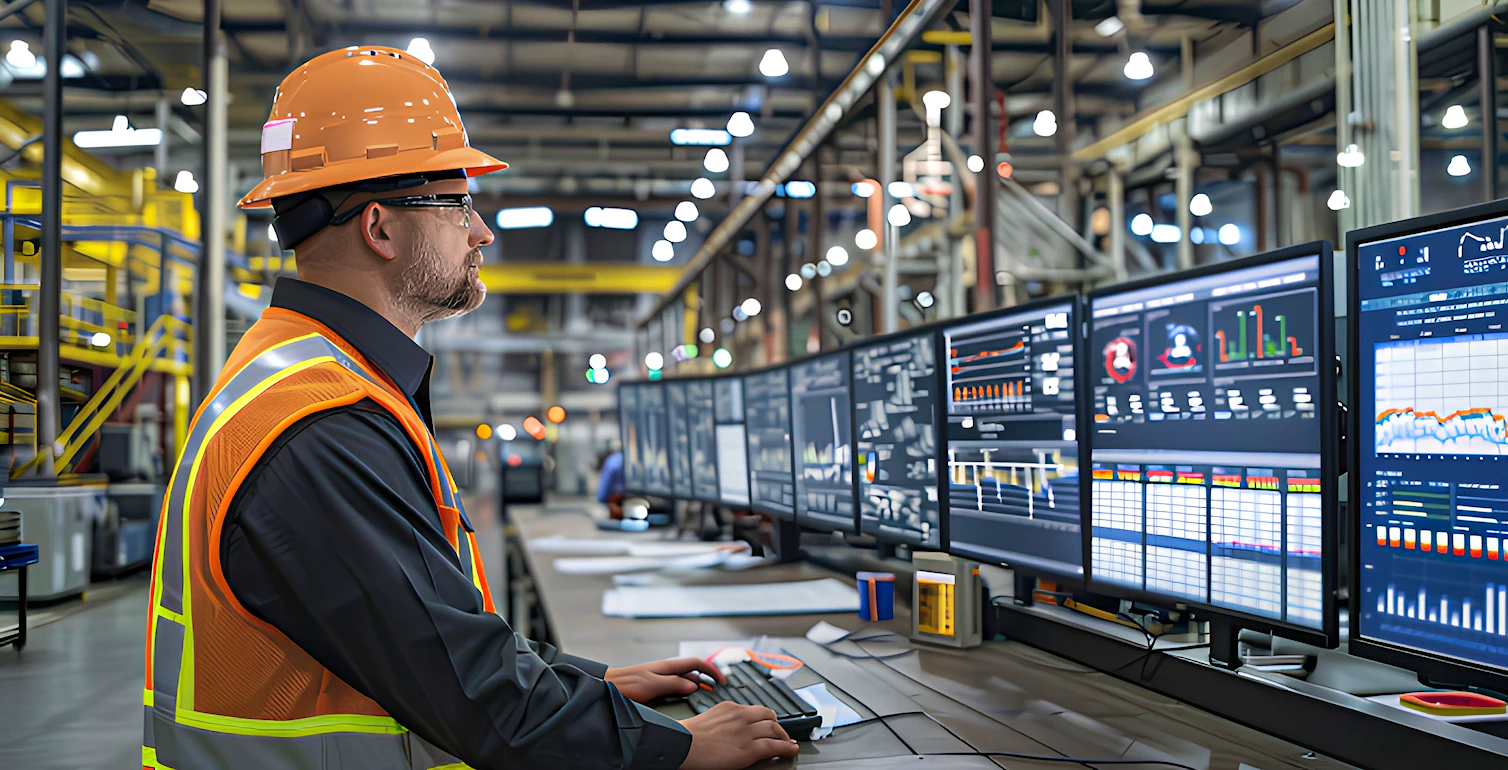
This is why smart factories — or the factories that “talk back” — have become paramount. These digitally connected, data-driven production environments facilitate interaction between machines, software and people in a continuous feedback loop to improve outcomes. For several years, the concept of the "Smart Factory" has primarily focused on visual monitoring through sensors and dashboards to identify issues. However, the emerging advancement centers on actionable intelligence. The integration of Physical AI is facilitating a transition from factories that merely collect and report data to those capable of purposeful analysis and autonomous operation.
Most manufacturing leaders now see smart factories with Physical AI as essential for future success: 92% believe smart factories will drive competitiveness in the coming years. These factories can sense, think, respond and optimize in real time, delivering immediate productivity and quality improvements that boost margins and provide an edge.
Factory floor realities depleting margins
In theory, all costs seem covered in the boardroom. Yet by the time shipping occurs, profit margins often shrink significantly. While known issues account for up to 30%-40% of revenue loss, manufacturers typically lose 11%-15% of total revenue to hidden inefficiencies that aren't visible until it's too late.
- Unplanned downtime continues to represent a significant financial challenge for manufacturing facilities. Over 75% of industry leaders estimate that the cost of unplanned downtime exceeds $500,000 per hour. The leading cause is equipment failure, responsible for approximately 42% of such occurrences. While major machinery failures are closely monitored, a substantial impact arises from the so-called "Hidden Factory"—numerous minor, undocumented interruptions that occur during every shift. Activities such as searching for misplaced tools, resolving minor sensor issues or waiting for supervisory approval may seem insignificant individually; however, these micro-stops collectively reduce productivity by an estimated 5%–20%.
- Quality decline is a serious concern. Issues like scrap, rework and warranty claims often go undetected until late in production or after products reach customers. In complex production environments, COPQ can be as high as one-fifth of total sales.
- In most plants, the main issue is not missing standards but a lack of real-time process visibility due to data silos. OT systems create large volumes of machine data, while IT handles production planning and records, yet these rarely connect in real time. Only 56% of manufacturers gather real-time or near-real-time data, leaving most data historic. Just 33% of organizations enable factory staff to make decisions using current manufacturing data, resulting in delayed or incomplete decision-making.
- Labor shortages worsen the issue as experienced operators retire and onboarding new talent remains challenging. Factories dependent on human diagnosis face resource strains and even qualified hires often lack essential context for effective decision-making. This leads to ongoing inconsistency and inefficiencies.
Factories that talk back turn visibility into margins
Every second of silence from your machines is a potential leak. "Talking" smart factories plug these holes. Smart factories tackle operational challenges by linking decisions directly to real-time data from sensors, connected machines and workers. With Physical AI and Agentic AI, smart factories not only analyze but also act on data, thereby empowering manufacturers to convert visibility into immediate profit gains.
Smart factories register up to a 20% increase in production output and employee efficiency and unlock up to 15% additional capacity as they move from watching to acting on data. Smart practices such as predictive maintenance can lower maintenance costs by 25%.
In a Smart factory where machines communicate, potential issues are detected by the equipment well before parts become unusable. By connecting AI agents to physical hardware, the system communicates with both upstream and downstream machinery, helping reduce scrap—a process known as predictive maintenance. Addressing problems at their origin not only conserves materials but also saves the energy and labor already invested in each part.
An additional benefit of responsive factories is proactive quality management. AI-based real-time monitoring and anomaly detection help managers catch production issues early, cutting defect rates by half and improving first-pass yield.
Making factories talk back (and listen) at scale
Turning a conventional production site into a truly smart factory isn’t just about adopting technology—it requires a bold strategy and unwavering execution to break free from the pilot phase and achieve real transformation. To ensure successful outcomes, it is essential that we:
- Start with value-led use cases: Target process bottlenecks that affect downtime, scrap rates and capacity for early impact and progress. Digital Process Twin is now a proven tool for resolving these issues.
- Establish a solid database like Unified Namespace (UNS): Scalable analytics and AI depend on reliable, standardized data from integrated OT and IT systems, poor data quality limits useful insights. UNS is a centralized software layer where every asset publishes its data in a standardized format.
- Deploy an edge-to-cloud AI stack: This forms the smart factory’s nervous system, solving industrial AI’s challenge: the cloud provides powerful learning, while the edge delivers fast action. Splitting intelligence between these layers enables manufacturers to achieve quick response times for Physical AI and leverage global data insights.
- Integrate intelligence into routine operations: Make insights actionable by updating workflows and using Agentic AI for tailored recommendations to staff. This lowers dependence and speeds up responses at all sites.
- Make workforce enablement a priority: Smart factories improve decision-making, but success relies on upskilling teams to use data confidently. Effective deployment requires investing in people and driving responsible, scalable innovation. This helps shift from human-triggered to human-supervised operations.
- Govern on results, not activity: Track yield, scrap reduction, OEE and margin growth (instead of dashboard metrics with little business impact) to ensure transformation supports real outcomes.
Without heeding these considerations, even the most advanced analytics may yield just disparate improvements rather than play catalysts for sustained competitive advantage. This is where leadership intent, operating model redesign and ecosystem partnerships become decisive.
The strategically feasible way to make factories talk back
As cost pressures increase and unpredictability becomes the norm, responsiveness is now the key to efficiency. Success won’t just come from having lots of data, but from turning insights into large-scale action. Making factories smarter allows business leaders to sense, decide and respond faster than disruptions can reduce value.
Still, achieving this goal requires expertise in managing a range of technologies. Thanks to years of experience transforming factories in many sectors, HCLTech has consistently delivered tangible results. The real issue isn’t whether factories can communicate, but whether leaders are paying enough attention to act—making the smartest move possible by partnering with specialists.
