
Modernizing a complex Singapore warehouse system without missing a beat
Overview
A global logistics and courier company needed to upgrade the warehouse management systems at two of its major Singapore sites, both running legacy platforms that had reached the end of their operational life. Both sites had highly customized configurations and the traditional approach to system upgrades would have been costly, slow and difficult to execute without disrupting live operations.
The organization partnered with HCLTech to design and deliver a smarter migration approach. The objective was to move both sites to a modern warehouse management platform, preserve existing custom functionalities, maintain alignment with the client's existing technology standards and complete the transition without operational disruption.
Built on HCLTech's Blue Yonder capabilities, this program delivered a faster, lower-cost and zero-disruption upgrade across both warehouse sites.
The Challenge

The legacy warehouse systems at both sites had accumulated years of custom configurations that were deeply embedded in day-to-day operations. Many of these customizations lacked sufficient documentation, making it difficult to assess their full scope or determine how they would behave in a new environment. Standard migration approaches were not designed to handle this level of complexity and the re-engineering required would have driven up cost and extended timelines well beyond what the business could accept.
The migration also needed to fully integrate with the client's existing technology and deployment standards, a critical requirement for a company operating global logistics infrastructure at scale. Without this alignment, the transition risked creating integration issues that would have undermined the reliability of connected systems across the broader network. The organization needed an approach that could navigate technical complexity, minimize cost and time and deliver a clean transition without exposing live operations to unnecessary risk.
The Solution
We designed and delivered an end-to-end migration program covering analysis, customization, migration, validation and deployment across both warehouse sites.
Key capabilities delivered include:
- A hybrid migration approach that preserved complex, under documented custom configurations in the target environment, giving teams continuity in how they work without requiring a rebuild from scratch
- A repeatable, automated approach to migrating data and configurations, reducing the risk of errors and the manual effort required across the transition
- Complete data continuity across master and transactional records, with no gaps or losses through the transition
- Careful retention of the operational logic that teams depended on, brought forward into the modern platform with minimal disruption to established processes
- Reuse of shared customizations across both sites, reducing duplication and improving the efficiency of the migration effort
- Integration with the client's existing technology and deployment standards, ensuring no disruption to connected systems across the broader network
The Impact
The program delivered measurable improvements in migration efficiency, cost and operational continuity:
- 53% cost savings compared to traditional migration methods
- 30% reduction in time compared to traditional migration methods
- Zero go-live issues across both Singapore warehouse sites
- Reduced manual effort and errors through automation across the migration process
Beyond the metrics, operational continuity was maintained throughout the transition with no disruption to warehouse execution and the reuse of shared customizations across sites improved efficiency and reduced duplication for future rollouts.
Beyond the Numbers
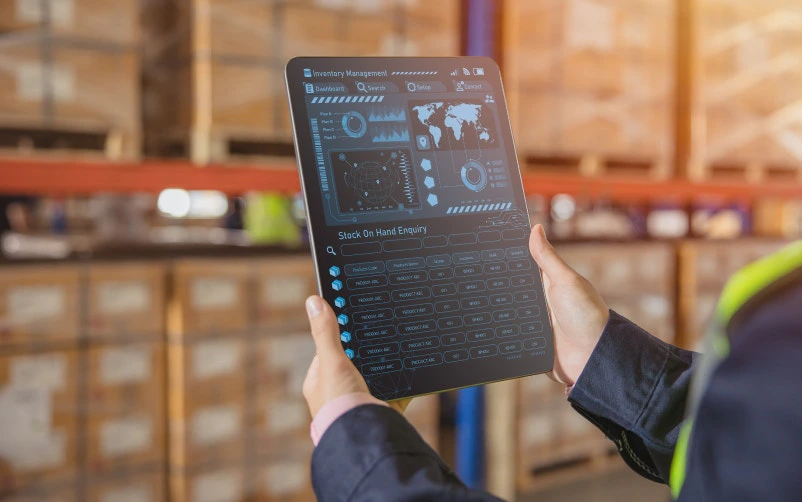
The most important outcome of this migration is one that is easy to overlook: nothing went wrong. For a logistics operation where warehouse downtime translates directly into delayed shipments and broken service commitments, a zero-issue transition is not just a technical achievement. It is a commercial one. The businesses that depend on these sites to move their goods had no reason to notice anything had changed. For them, nothing did.
These improvements reflect Total Experience principles, where well-executed operational change creates better conditions for the teams running the system and the customers depending on it. For warehouse teams, a modernized platform means greater capability and reliability without the disruption of learning an entirely new way of working. For the businesses relying on the logistics network, the result is uninterrupted service from a more capable and future-ready operation.
With both sites now running on a modern warehouse foundation, the organization is well-positioned to extend further upgrades across its network, applying the same structured and repeatable approach to achieve consistent results at lower cost and lower risk.
Celebrating Success
This transformation reflects findings from HCLTech's The Blueprint to Total Experience report, which surveyed 600 senior business and technology leaders across Europe, the US and Asia-Pacific. The report highlights that 57% of travel and transportation companies cite better products and services as a primary business benefit from experience-led transformation. For a logistics operation, the most tangible sign of a better product is a warehouse that keeps running without interruption, delivering the operational continuity that businesses that depend on it cannot afford to lose. That is precisely what this migration delivered.
The report also highlights that firms report improved employee engagement and morale (46%) and greater staff productivity (43%) when workflows are unified and supported by integrated systems. For warehouse teams inheriting a modernized platform with familiar, preserved workflows, the result is greater capability and confidence without the disruption of rebuilding how work gets done. With Singapore sites now running on a modern, consistent foundation, the organization is well-positioned to extend the same approach across its broader global network.
Related Case Studies

Helping a leading telecom provider improve service reliability, operating efficiency and readiness for continued transformation
Learn more
Accelerating software delivery, resilience and developer productivity with AI-driven quality engineering.
Learn more
We helped the City of Tacoma modernize their analytics through a large-scale SAP S/4HANA transformation using an AI-enabled automation engine
Read the case study
Reducing investigation time, strengthening test confidence and speeding licensing turnaround across a complex application landscape.
Learn more
Enabling an AI-led engineering model that modernizes software delivery, boosts developer productivity and accelerates innovation
Learn more
We helped BWPC unify procurement on a single SAP Ariba platform streamlining processes and repositioning procurement from a transactional function into a strategic enabler of healthcare delivery.
Learn more