
Featured

AI-led engineering: Turning product complexity into manufacturing advantage
As manufacturers move AI from pilots into product development and production, competitive advantage will depend on connecting industrial data, digital twins, knowledge graphs and governed Physical AI
Top stories
All content

Agentic AI is an autonomous system that automates complex tasks and enhances human decision-making
Read the article
What’s next for the ASEAN insurance industry?
Learn more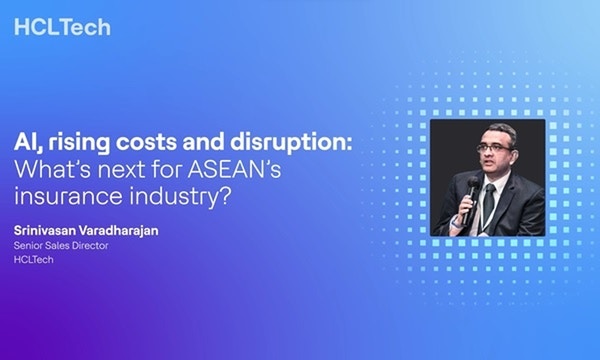
Srinivasan Varadharajan, Senior Sales Director at HCLTech, reveals how AI, soaring medical costs and regulatory shifts are forcing ASEAN insurers to rethink strategies — or risk being left behind
Read the article
Implementing Responsible AI requires a multi-faceted approach, with both organizational and cultural changes needed
Read the article
Nick Ismail and Heather Domin discuss the evolution of Responsible AI, implementation challenges, common misconceptions and the critical steps to ensure AI systems are fair, secure and transparent.
Listen now
Implementing Responsible AI at scale will deliver a significant competitive advantage for organizations
Read the article
Heather Domin shares her views on the rise of Responsible AI
Watch the video
As insurers adopt AI/GenAI to enhance underwriting, Kaye Hacker, VP of Insurance at HCLTech, shares insights on tackling efficiency gaps, regulatory challenges and real-time risk assessment
Read the article
Using agents to boost productivity, creativity and strategic growth
Read the article
Agentic AI is revolutionizing customer experience by going beyond automation, offering real-time personalization and making independent decisions for enhanced ROI
Read the article
From the skills gap to perceived risks and procurement fragmentation, there are several barriers to the adoption of AI in the public sector
Read the article
Generative AI is not just cheaper, it’s faster, more efficient and unlocking new opportunities across industries
Read the articleTrending questions
The term "artificial intelligence" was coined by John McCarthy in 1956. Alan Mathison Turing, followed by Newell, Simon, McCarthy and Minsky, are key figures in AI development. Newell and Simon's 1956 "Logic Theorist" program marked a milestone. These pioneers, known as the founding fathers of AI, significantly advanced the field.
- Increased productivity
- Increased automation
- Smart decision-making
- Solve complex problems
- Managing repetitive tasks
- Strengthens economy
- Personalization
- Disaster management
- Enhances lifestyle
- Global defense
Machine learning is the brain of AI that emulates logical decision-making based on the data fed to it and an AI model is the creation, training and deployment of the ML algorithms. With advancements in intelligence methodologies, AI models support in tandem with real-time analytics, predictive analytics and augmented analytics using natural language processing (NLP), ML, statistical analysis and algorithmic execution.
Loaded with human capabilities and beyond, the importance of artificial intelligence (AI) is rising and gradually spreading to various industries, making way for new possibilities and better efficiencies. Data in today’s world is an asset and valued across industries. With AI, humans are now able to absorb, interpret and make complex decisions.
While artificial intelligence is a system that mimics or imitates human intelligence, machine learning is the brain that helps it work.
Generative AI refers to a subset of artificial intelligence algorithms and models designed to generate new data that resembles existing data. These sophisticated algorithms can create content in various forms, such as text, images, music and even complex structures like designs and models. Generative AI is primarily powered by advances in neural networks, particularly Generative Adversarial Networks (GANs) and Variational Autoencoders (VAEs).
Subscribe to the HCLTech Newsletter
for our latest news and insights