
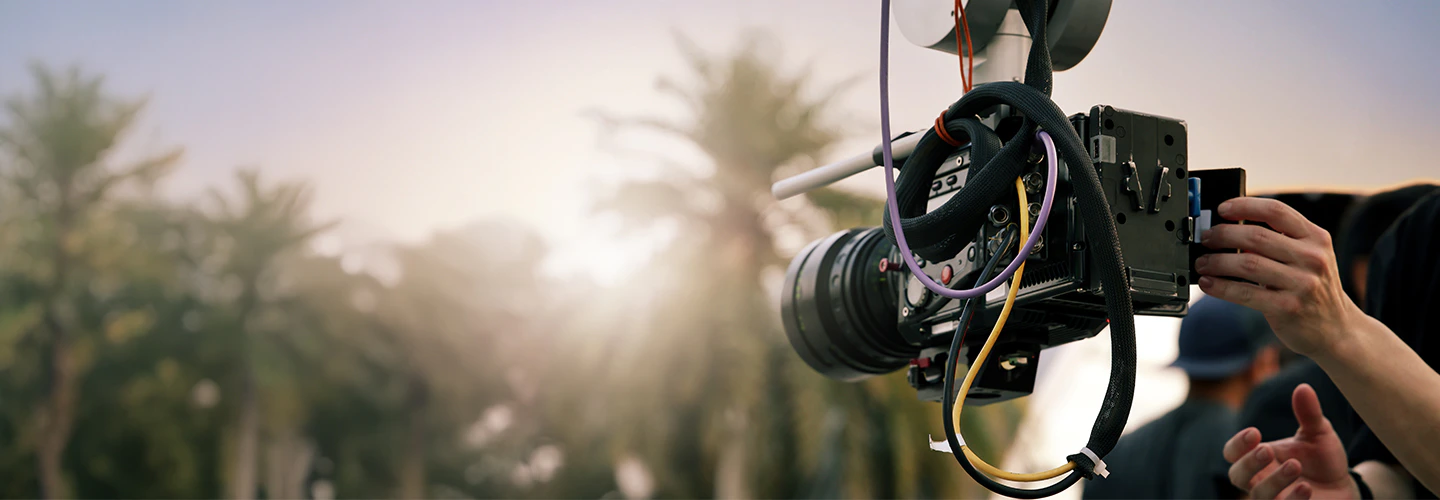
Redefining photography through AI-powered intelligent automation
Overview
For decades, professional, high-end cameras have been the go-to choice for photographers, delivering unmatched precision and image quality. Yet, for beginners, these devices present a steep learning curve. The advanced features, such as manual controls, technical settings and intricate adjustments, often act as a hurdle for those just starting their photography journey. A global optics and imaging giant faced this challenge as it sought to broaden its market reach by making such camera more accessible to aspiring photographers.
To address it, they turned to HCLTech. Together, we developed AI-assisted models that simplified complex camera operations by embedding intelligence directly into these cameras. The result was a camera that not only preserved the precision professionals expect but also guided beginners with real-time assistance, making advanced photography more accessible than ever.
This case study explores how HCLTech empowered the client to reimagine camera photography experience and expand their market reach, delivering AI-enabled features that open the world of advanced photography to everyday users.
The Challenge
While professionals highly regarded the client’s professional cameras for their industry-leading image quality, beginners often found such cameras overwhelming. Advanced features, such as controls for exposure, focus, white balance and scene composition, demanded expertise and new users tend to be discouraged. In some cases, the steep learning curve can also lead to abandoned purchases, limiting the brand’s reach beyond expert photographers.
Integrating AI into the camera presented a distinct challenge. The models had to run on limited compute and memory, without increasing the size, weight, or draining the battery. At the same time, the performance had to be seamless. Every adjustment, from autofocus to scene recognition, needed to respond instantly, with the system running at multiple frames per second, so users never felt lag or delay.
Building trust was equally critical. Beginners needed features they could rely on without second-guessing. This implies delivering accuracy while keeping false detections low. As smartphone cameras continue to improve, the cameras must differentiate by offering not just image quality, but also intelligent, user-friendly features that make upgrading truly worthwhile.
The challenge was clear: build a compact, reliable, AI-driven professional camera that balances industry leading performance with beginner accessibility, while staying competitive in a fast-evolving market.
Our Solution
HCLTech collaborated closely with the client to design and deploy a custom AI-assisted camera solution that combines both innovation and practicality. The focus was on building an AI-driven camera system that could simplify photography without compromising on quality.
Key highlights
- AI model development for critical camera features such as autofocus, auto exposure, auto white balance and scene composition
- Large-scale datasets were collected across varied geographies, breeds and cuisines to ensure wide coverage and robust model training
- Instead of using off-the-shelf models, handcrafted networks were built and trained from scratch to achieve high precision in object detection and scene classification
- Deep learning models developed in Darknet and TensorFlow were miniaturized and integrated directly into the camera hardware for on-device performance
- Large models were compressed using quantization and pruning, allowing them to run efficiently within the camera’s limited compute and memory capacity
- Spatial pyramid pooling improved the system’s ability to detect objects and features across varied environments
- Indigenously developed embedded AI inference framework (emAct) for low-latency

Impact
The AI-assisted camera solution transformed the camera experience, delivering beginner-friendly operational excellence while retaining professional-grade output. This helped to position the client as an innovation leader in consumer imaging while opening avenues to capture increased market share.
- 94% overall solution accuracy for object and scene recognition
- <10% false detection rate, ensuring reliable automation
- >30 FPS real-time performance, enabling smooth camera operation
- Increased market share by opening the camera range to the beginners segment with AI-enabled simplicity
As a trusted AI engineering partner, HCLTech helped the client transform their product portfolio, drive customer inclusivity and reinforce their leadership in the global imaging market.
Related Case Studies

Learn how a European bank modernized its infrastructure, reducing its server footprint, power consumption while building a high-performance, AI-ready foundation for growth.
Learn more
Empowering a leading transport authority to modernize waterways with AI-powered real-time monitoring and predictive intelligence
Learn more
Enabling end-to-end visibility and one-click exception resolution for a leading cash management company
Learn more
HCLTech transformed people experience with an AI-enabled SAP HXM platform to streamline HR, improve compliance and boost workforce productivity.
Learn more
This case study examines the collaboration between HCLTech and the client in designing and deploying a state-of-the-art system.
Learn more
A digital platform turned a major revenue setback into a GenAI-led comeback with custom silicon and hyperscale infrastructure. Discover how this transformation drove 50%+ TCO reduction.
Read more